Thursday, 21 November 2019

Joining a Book Club


Until about grade six, I was the weird kid to only wanted to read all the time. As I got into my teen years, I prioritized having friends/not getting bullied so I didn’t read as much anymore, and into adulthood kind of went through phases where I’d buy a bunch of books and read for a while, and then not read for a stretch of quite a few months. A few years ago a library opened up within walking distance of my house, and I have been reading a LOT ever since. 

It turns out, you can get books for free?! as long as you bring them back eventually. You don't have to be a slave to Amazon and shell out 30 bucks for a paperback (or a few megabytes) you might not finish or like! What a concept. The library is the best. Please, take all of my tax dollars. On average, I probably get through 1.5 books a week (I’m up to 74 in 2019 as of today). Because my husband also got really into the library about a year after me, we’ve actually done some (drastic?) things like cancel Netflix in order to spend more time with books.


(The SPL also does this great thing where they tell you the value of all the books you've taken out. I'm up to $2650 in 2019 - can I read 3 grand worth of books before December 31? Challenge accepted!)

One very fun thing that has happened as a result of reading a lot is joining a book club! I was out for supper with a friend I hadn’t seen in a long time, and she mentioned Tara Westover’s Educated, which her book club had just finished reading. I’d read the book and loved it a few months before, so she invited me to come to the meeting the next evening.

It is so enjoyable to read a book and then get to talk about it with other people who also read it. And maybe the best part is it has exposed me to books I never would have picked off the shelf for myself, but am so glad to have read. And this has made me a bit more adventurous at the library, in grabbing books I haven’t vetted through the Goodreads reviews beforehand (which has worked out well... most of the time).

I think there is some sort of joke out there that “book club” is a euphemism/excuse for getting out of the house and drinking wine. While the quorum at the meetings of my book club generally have finished the book, one is also always welcome to come listen to spoilers and have a visit even if they didn’t read it. It is just a very nice and wholesome grownup activity, where the beverage of choice is usually herbal tea so that we can all still get to bed at a reasonable hour. Being a grownup is great!

One cool thing that the Saskatoon Public Library offers is public book clubs, so if you don’t have a friend with a ready-made book club to join you can sign up and join the monthly discussion. It’s a free activity with a lot of potential benefits, and the worst thing that could happen is not liking the book. I like those odds!

Tuesday, 12 November 2019

Cooking with Animal Fats

I had a long-winded draft of this post written and I really hated it so I'm just going to get right down to it: animal fats are very good for cooking with!

Growing up when margarine was still considered healthy, even the word "lard" was enough to induce gagging when we heard it as kids, though I didn't really know what it even was - it just sounded gross. But fast forward into adulthood where I started saving the bacon fat for frying eggs, which turned out to be a gateway.

I don't like the strong smell of beef tallow so I rarely use it unless I have some extra from making soup, but pork lard and chicken fat (chicken fat is commonly referred to as "schmaltz") are


Lard actually doesn't have much of a flavour (you could use it in sweet applications like pie crust), but schmaltz is definitely very chickeny which is great especially if you're browning onions etc. to eventually use in soup with a chicken broth base. Baked oven fries or hashbrowns are very, very good when you use animal fat. I am definitely prone to bastardize classically vegan dishes like falafel by frying in pork lard.

I cook a lot of vegetarian meals which can be made to taste richer when the base fat is chicken or pork. Animal fat also has a much higher smoke point than vegetable fat which means you are less likely to burn things if you are sauteeing/frying/roasting at high heat. It also makes whatever you're cooking MUCH crispier and (in my opinion) less greasy than vegetable fat frying.

I am not against vegetable oils, which have their place, but I am definitely over using extra virgin olive oil as the base for everything. Olive oil tastes like olives, folks. Not everything needs to taste like olives!

It is easy-ish to collect small amounts of animal fat from your cooking to use later but only if you are doing things like homemade stock on a regular basis. I wouldn't buy it from the grocery store because I've heard, for example, that lard sold for pie crust purposes has been altered a bit to make it more solid. Luckily in Saskatoon (and most of Saskatchewan) it's not too difficult to come by a variety of simply rendered animal fats from very cleanly and humanely raised animals. Cool Springs Ranch sells pork, beef, and chicken fat for about $9/litre through their monthly pickup program and I will vouch for the great quality and flavour. While I haven't purchased from them, Farm One Forty(/Odla Restaurant) also sells pork lard and I'd assume it to be of similar quality. I'd guess some of the health food stores probably carry animal fats from local producers, but don't go driving around the city on my assumption only.

We have been using animal fats pretty regularly in our home cooking for several years. While I'm not here to defend it nutritionally, I haven't found it to be "bad for me" in any measurable quantity. What it does do very obviously is improve the quality of our homemade meals!

Thursday, 7 November 2019

Tomato Pie


I have been thinking I need to write a post about tomatoes for a while and then realized that would be a silly endeavour as I could honestly start an entire separate blog about how much I love tomatoes. So, here is a decidedly unseasonal post about one of my favourite things to do with home grown tomatoes, written wistfully while the last of my 2019 San Marzanos ripen on the counter. 

I have been following the blog (upgraded in recent years from blog to “site”) Simply Recipes for years, and the recipe for Tomato Pie caught my eye several summers ago. I have made it multiple times a summer ever since, starting with store bought crust, sometimes using a hollowed out summer squash or zucchini instead of pie crust, and this year finally evolving the recipe into a true labour of love (and multi-hour project) with a homemade crust. It's sort of like deep dish pizza, except if deep dish pizza was actually pie, i.e. the best thing ever.

The recipe as-written makes a pretty darn good pie but when you make a recipe so many times it’s inevitable to find a few ways to improve it. I also never got a fully baked pie crust by only pre-baking for 25 minutes as written; it needs at least 45.

I have and likely will never make this out of season. I’m sure it would turn out just lovely using greenhouse tomatoes, but as with many recipes I associate with summer (beet borscht is another one), it just feels a bit sacrilegious to make if I haven’t grown most of the ingredients myself. It would probably also stop feeling like a special treat if I started making it year round, and that just won’t do.

We are so lucky in Saskatchewan to have long summer days that are perfect for tomato growing and I am addicted to growing fun and fanciful varieties and figuring out how to best use them. Example - look how cute my tiny Spoon tomatoes are on top of a tomato pie! Spoon tomatoes are some of the smallest you can grow and apparently the closest you can get to The Original Tomato, but they are annoying to pick, not especially flavourful (but decent), and a lot of work for a few handfuls of tomatoes but just LOOK HOW CUTE AND PRETTY. They are about as whimsical as a tomato can get and they make me very happy. I am not ashamed to say that I grew them this year specifically to make pretty food.


Bonus because this post is low on pictures, here they are peeking out of a Greek salad:


Here is my recipe for tomato pie, adapted from Simply Recipes. I’m not going to pretend it’s a particularly simple weeknight dinner. While none of the steps are difficult, it does take a while but it’s worth every minute. If you love tomatoes you won't be sorry.


Time: Approximately 3 hours from start to finish if you're making your own crust, but only about 1 hour of actual hands-on time
Serves: Realistically, 3-4 people as a main course

Ingredients:

1 9-inch pie shell (I follow the combo butter/shortening recipe here but use bacon fat instead of shortening)

Cooking fat of your choice (I like bacon fat, olive oil is fine)
½ cup chopped sweet onion
1-2 garlic cloves, pressed
Pepper to taste
1 cup of chopped beet leaves, swiss chard, or other greens
3 cups of chopped, salted, and squeezed tomatoes (see original recipe if my directions don't make sense, I use an old fashioned potato ricer. Do not skip the squeezing unless you are using extremely low-moisture tomatoes)
2 tbsp cornstarch
¼ cup chopped basil

1 cup mozzarella cheese, grated
¼ cup mayonnaise
A few dashes of hot sauce of your choice (green Cholula, or Tapatio works well)

Directions:

Preheat oven to 350. Cover the pie crust in foil and fill with pie weights. Bake for 45 minutes.

Liberally salt the chopped tomatoes. Don't worry about using too much, a lot of it will drain off. Let sit for at least 10 minutes. 

While the crust is baking, brown the onions in the oil/fat. Add garlic and greens and cook until greens are wilted.

Squeeze as much liquid as you can out of the salted tomatoes (but you don't have to go nuts, the cornstarch will take care of whatever you leave). Mix the tomatoes, contents of your frying pan, basil, as much pepper as you feel is necessary, and cornstarch together.

Mix the cheese, mayo, and hot sauce together.

Remove the foil from the crust (don’t throw it out yet) and put in the tomato filling. Top with the cheese mixture. Top with extra tomatoes if you wish (make sure they are low moisture so you don’t end up with soggy topping).

Bake for about 45 minutes or until you see the filling bubbling. Let sit for about 10 minutes before cutting. If the crust starts browning too much, cover with the leftover foil.

If you have leftovers do yourself a favour and reheat them in the oven, not the microwave.

Reminder that this filling/topping is also excellent in a zucchini boat, if you are avoiding carbs or have a giant zucchini to use up.

Wednesday, 30 October 2019

The WWZ Lifestyle


It’s still October. There’s a thick blanket of snow on the ground in Saskatoon. Readers, it’s time to talk about That activity – the simplest winter life improver Saskatchewan has to offer, but also one of the hardest to get into, the one we all have a bottomless list of excuses for not doing. I’m talking of course about becoming a Winter Walking Zealot.

I personally self-identify as a Winter Walking Zealot, or WWZ. I am here to admit: it’s terrible. It’s 100% terrible in the moment like 95% of the time, unless you happen to hit the sweet spot where your winter clothing choices overlap with the temperature, humidity, and wind speed at the exact intersection of legitimate outdoor winter comfort. The perfect winter walk is what we WWZ’s strive for yet rarely achieve.

So yes, admittedly it’s terrible most of the time, but the benefits are many. It prevents cabin fever, spares you from sitting in a cold car and/or saves gasoline, exposes you to the various good things that are associated with exercise such as improved physical and mental fitness, recharges your energy, gets you some vitamin D and fresh air, and in general will just make you feel ALIVE. It is is a bit like joining a fight club where the members are you and Mother Nature.


Yes, it truly is one of those old-fashioned "character builders." (It's not lost on me that many of the activities I recommend on this blog are things that many people would rather gouge their eyes out than participate in; "saskatude" is perhaps is an unintentional euphemism for character building and maybe the dads really did know what they were talking about all along.) It’s uncomfortable and awful in the moment but when it’s all over the sweet comfort of a heated grocery store or your own living room is a high reserved especially for the WWZ. You did it! You winter walked and made it back to a temperature-controlled environment in one piece! Reward yourself with an impulse buy from the candy section or a hot cup of Sleepy Time Tea.

Now, after that EXTREMELY CONVINCING and fun-sounding argument with zero holes in it, here are the steps to become a WWZ:
  1. Commit to not driving anywhere within a radius of your choosing (for me, this is anywhere I can physically see from my house or workplace)
  2. Obtain weather-appropriate clothing*
  3. Put on said weather-appropriate clothing
  4. Go outside and walk where you’re going instead of driving
  5. Repeat
*I’m talking: Parka! Toque! Mitts**! Scarf***! Boots****! Long johns! Ski pants! If you’re going to WW at night, get some high-viz armbands, they are cheap to order on eBay and drivers will thank you.
**not gloves, they make your fingers cold
***maybe two, one for under the coat and one for over
****rated for -40, natch, do not be That Guy trying to WW in Converse runners

It is VERY! important to note that one cannot truly ascend to WWZ levels if trying to WW without adequate personal protective equipment; I’m not being tongue-in-cheek or making a joke because I’m a safety profesh, I’m legitimately begging you to be safe out there. You know who you are, Bare Ankles McGillicuddy, suck it up and put on some gosh darned long pants. A second important note is that none of this clothing need be exorbitantly expensive. If you’ve bought into the extremely false narrative that the only way to be warm in winter is to buy a coat that costs $900 and rhymes with shmanada shmoose, I feel bad for you son, I got 99 problems but spending thousands of dollars on winter layers ain’t one.

(The Gap appears not to be currently advertising styles appropriate for the WWZ, but this can be remedied with ski pants and/or high socks.)

If you don’t actually have utilitarian places you can walk to in your non-driving radius, you’re going to have to set some sort of alternative walking routine. Is it around the block every night by yourself? Can you find a WWZ partner who lives an acceptable distance away and walk over to each others’ houses on alternating evenings where the other is waiting with a hot drink? Do you have to do it anyway because you have a dog?

Having a library and grocery store open up about 1km from my house was the kick start I needed to become a WWZ, and it’s always easier when the walk has a purpose. But the habit is pretty engrained now so I usually WW at least 5 times a week whether I have a destination or not. It absolutely makes me feel better, even though I curse it the entire time. It’s not TOO cold yet – don’t wait until it’s -40 to give it a try.


(I'm not joking about the high-viz armbands. They stay on my coat all winter long.)

Tuesday, 22 October 2019

Why didn't I do this sooner: Duolingo


You know how sometimes you just feel like sitting in a chair and swiping around on your phone but then it accidentally makes your life worse? WHAT IF you could do this, but not come out more depressed and anxious than before?

I’ve mentioned a few times how stopping with the excuses has been a life-changing mind shift for me. For the record I’m not strictly against making excuses, as long as one knows that’s what they are doing. For example, if you don’t want to go for a walk because you have a cold and just want to veg out and watch TV today, own it. If you say you CAN’T go for a walk ever because you don’t have time and then you spend that time watching TV and swiping around, that is where one runs into trouble. All this to say, I used to complain that not being able to grow up somewhere with a school French Immersion program prevented me from being bilingual. That, friends, is an excuse that needn’t fly in the Future in Which We Live.

I’d heard good things about Duolingo for a while and one day when I was bored and swiping away at my phone making my life worse, I decided to download it. I was and continue to be very impressed! I’m working through the Spanish course because I think unless you are going to spend a lot of time in exclusively-French speaking Quebec or France, Spanish is probably the more practical language for most North Americans to learn.


I’m not sure how fluent I’ll become even if I work my way all the way through the Duolingo “Tree”. Internet people all have their various preferences for language learning software and one major critique of Duolingo is that the learning style is mostly direct translation, so you can’t really start to think in Spanish. I don’t know if I should switch to an immersion program instead, or just supplement Duolingo with Spanish immersion in the form of TV (or the Duolingo podcasts) as well as a textbook for getting a better handle on all the grammar rules.

I’m also kicking myself for not doing this earlier when I was sharing an office with native Spanish speakers, or doing even a few weeks of Italian before going to Italy (two times! What is my problem). After starting the program about a month ago, I just progressed out of the introductory level and definitely can’t hold a conversation but know a variety of greetings, pronunciations, and essential phrases (donde esta el bano, how ignorant have I felt for not even knowing how to say that the three times I’ve been to Mexico).

Maybe Duolingo isn’t the tool to get to total fluency but it’s definitely a very easy way to prep oneself to be decently respectful if traveling to a place where English isn’t the first language, and a much better use of screen time than social media.

Tuesday, 15 October 2019

Manitou Beach


Last weekend we spent a day/night in Manitou Beach. This charming and sad little resort town, just minutes from Watrous and about an hour from Saskatoon, is very near and dear to my heart for several reasons. It is a place my family frequented as a summer day trip when I was a kid, and the spontaneous Plan B when Brahm’s and my very first “getaway” as a couple (camping at Greenwater Lake) got torrentially rained out. In recent years it’s been a nice place for a mini-escape in fall or winter.


On my first childhood encounter with Manitou, one of my parents had heard it was a neat place to visit so we decided to make a Saturday trip in the summer. My mom shared the plan with one of her co-workers, who told her that the pool was the best ever. I am not sure what pool the co-worker was referring to, but my mom interpreted it as being the Watrous public pool, so on the way to Manitou we stopped and spent a few hours at the outdoor pool in Watrous. Suffice to say it was nothing particularly special. We continued on to Manitou and immediately regretted wasting part of the day at the crowded pool in Watrous, as stepping into Little Manitou Lake was one of the most amazing experiences of our young lives! With a higher salinity than the Dead Sea, it’s impossible to sink, and what could be more relaxing for an adult, or fun for a kid, than to float the day away?


We eventually concluded that the pool my mom’s coworker was probably referring to was the Manitou Springs Spa pool (WARNING - link autoplays a video with sound), which filters and heats the lake water. As kids, we always just went to the free lake rather than the “expensive” pool, which we assumed was just for rich people who were staying in the hotel and wearing their hotel robes right down to the pool. Oh, what luxury. We could only dream! As an adult with disposable income I can and do stay in the hotel, use the robe, and generally prefer the heated, shrimp-free pool over the lake. Relatively speaking, a night at the hotel is a pretty good deal as it includes swim passes and a hot breakfast buffet. Our recent hotel bill, which included supper and ice cream at the unexpectedly excellent poolside cafe, came in at just under $200.


Some of the charm of Manitou Beach seems to be that time has forgotten it a bit. There are no franchises and a lot of the signs and storefronts seem like they’re from a bygone era. I don’t really feel like I’m in rural Saskatchewan when I’m there; it’s got a bit of an island vibe. It’s a truly unique community, and in my opinion a local gem that everyone in Saskatchewan should visit at least once in their lifetime.


Why, if it’s so great, did I also describe it as sad? A couple years ago, we noticed a lot of prime-looking lakefront properties for sale, for shockingly low prices. As we drove around looking at the various properties, we realized what was going on: the water level in the lake wasrising and a lot of the community was threatened with flooding. Every time I visit, I really never know if it might be the last time.


If you live in Calgary or Vancouver, a one-hour getaway to the mountains or another world wonder is pretty easy. In central Saskatchewan the options are a bit more limited, but Little Manitou Lake and its community of Manitou Beach are one-of-a-kind. Please visit this special place while you still can!


Thursday, 3 October 2019

I want to ride my bicycle

It seemed like winter had arrived in Saskatoon, alas it was only the annual "tease freeze" - one hard freeze and a bit of snow before the weather warmed back up to 15ish for several weeks. I'm glad for many reasons (though as always, annoyed I had to take my tomatoes out when it's going to be sunny and warm for a few more weeks), but the top one this year might be that I wasn't ready to stop riding my bike yet.

I have owned my current bike for about 10 years but it's gotten most of its use in the past three, with an exponential increase in 2019. I began to realize how empowering it felt to not have to be tied to a car on a couple occasions last summer, and used my bike to get to most routine locations over the summer this year.

I love the feeling of using my own body for relatively fast transportation, and getting fresh air and exercise while in transit. I feel like I'm maximizing the efficiency of travel because I'm getting from A to B while also improving my physical and mental health AND increasing my energy levels. I have grown to dislike driving a lot in recent years; to me it is a high risk/low reward activity that also totally drains me of energy.

I won't go on a rant about the lack of good cycling infrastructure in Saskatoon because that's not what this post is about. I've been able in most cases to find routes that stick to lower-traffic streets without sacrificing more than a minute or two of the commute. It's still a learning process for me to take up space on the road and figure out how to maneuvre some confusing infrastructure situations but overall, I don't feel particularly unsafe biking on the road with cars. That said, I'm not ready to become a winter cyclist, and likely will never be. I will enthusiastically walk in -40 (post forthcoming) but my saskatude has its limits.

What was the secret to cycling more? As I've previously mentioned in another post, once I stopped making excuses about why I couldn't ride my bike around the city I just... started doing it, and realized it was awesome. Here's hoping for another few weeks of roads free from slush and snow.

(I have no pictures of me on a bike as an adult, so here is a picture of my dad helping me learn to use my first tricycle.)

Wednesday, 18 September 2019

Bird Watching - Pokemon Go IRL


I cannot recall the moment I decided to get interested in birds, but over the past couple years I have slowly been working on my bird watching skills. I am still very very novice, but this has become a truly fulfilling and fun hobby.

(American goldfinch in my neighbours' crabapple tree)

I continually tell people who raise an eyebrow that birding is basically playing Pokemon Go in real life, but with a near infinite number of Pokemon to catch. You can even gamify it using an app like Audubon, or a simple paper checklist, to record all your “catches.”

(Tree swallows have hemmed and hawed over our bird house for two summers but never moved in)

Previously I, like many people, just saw birds in the background. While it might be pretty amazing to see a deer or a fox “in the wild”, I didn’t register that it could be just as exciting to observe birds in their natural (or slightly unnatural, such as at a feeder) habitat. Once that switch flipped, I not only had a challenging new hobby but a simple way to practice mindfulness nearly anywhere I went.

I don’t know if there’s a “best” way to start birding but what I did was get a bird book, and then just started taking pictures of birds, especially those I couldn’t identify. I’d use the photos and the book to ID them when I got home. I also print out a picture of each species and put it in a photo album, which serves as my “bird collection.” It helps to have a camera with a high zoom and not just a phone. For more affordable camera options, Canon’sPowerShot Elph line is great as it has pretty high zoom capabilities and fits in a pocket – you’re not going to get magazine quality photos, but definitely good enough to ID a bird that’s fairly far away. I also have a DLSR with an 18-250mm telephoto lens, which I’m thinking about upgrading to something more powerful as a grad present to myself, but this is more of a luxury than a necessity. You can also just use (cheap) binoculars but I may be too entrenched in the “pics or it didn’t happen” generation because I prefer to have photos.

(Got to watch this baby learn to fly in our yard over a two week period, do I have a thousand pictures of it? You know the answer to that question)

I am pretty lucky because there is a storm pond about a block from my house which attracts a lot of bird life. I can usually ID between 10-20 different species on a 30 minute walk around the pond, and I’ve yet to go there and not see something new to me (who knew there were soooo many different kinds of ducks??). It’s also pretty amazing what can happen if you put a feeder in your yard – even though our area is very “newly developed suburbia” with no mature trees and the bird life is 95% house sparrow, we’ve also had a relatively wide variety of other birds show up on our property  – American goldfinches, house finches, slate coloured juncos, tree swallows, cedar waxwings, American robins, one yellow warbler, chipping sparrows, brown headed cowbirds (which laid an egg that the chipping sparrow had to raise), black-capped chickadees, Brewer’s blackbirds, and the occasional crow or raven. It’s also not uncommon to see pelicans soaring around right over the deck, which gives my tiny suburban yard a bit of a tropical feel.

(Chipping sparrow mom feeding brown headed cowbird baby)

When I recently travelled to Bologna, Italy for a conference, I was pretty struck by the lack of green space and bird life in the city (other than pigeons). After traveling I often come back jealous of cities that aren’t designed around worshipping the Almighty Car, but this time I did realize how lucky we are in Saskatoon to have all the green space we do, especially our urban forestry program.

(Great blue heron coming to say hello at the storm pond)

There’s probably a bird out your window right now – can you identify it? What's it doing, and why? These simple questions are all it really takes to get hooked!

(We won't talk about what happened to this baby killdeer shortly after the photo was taken)

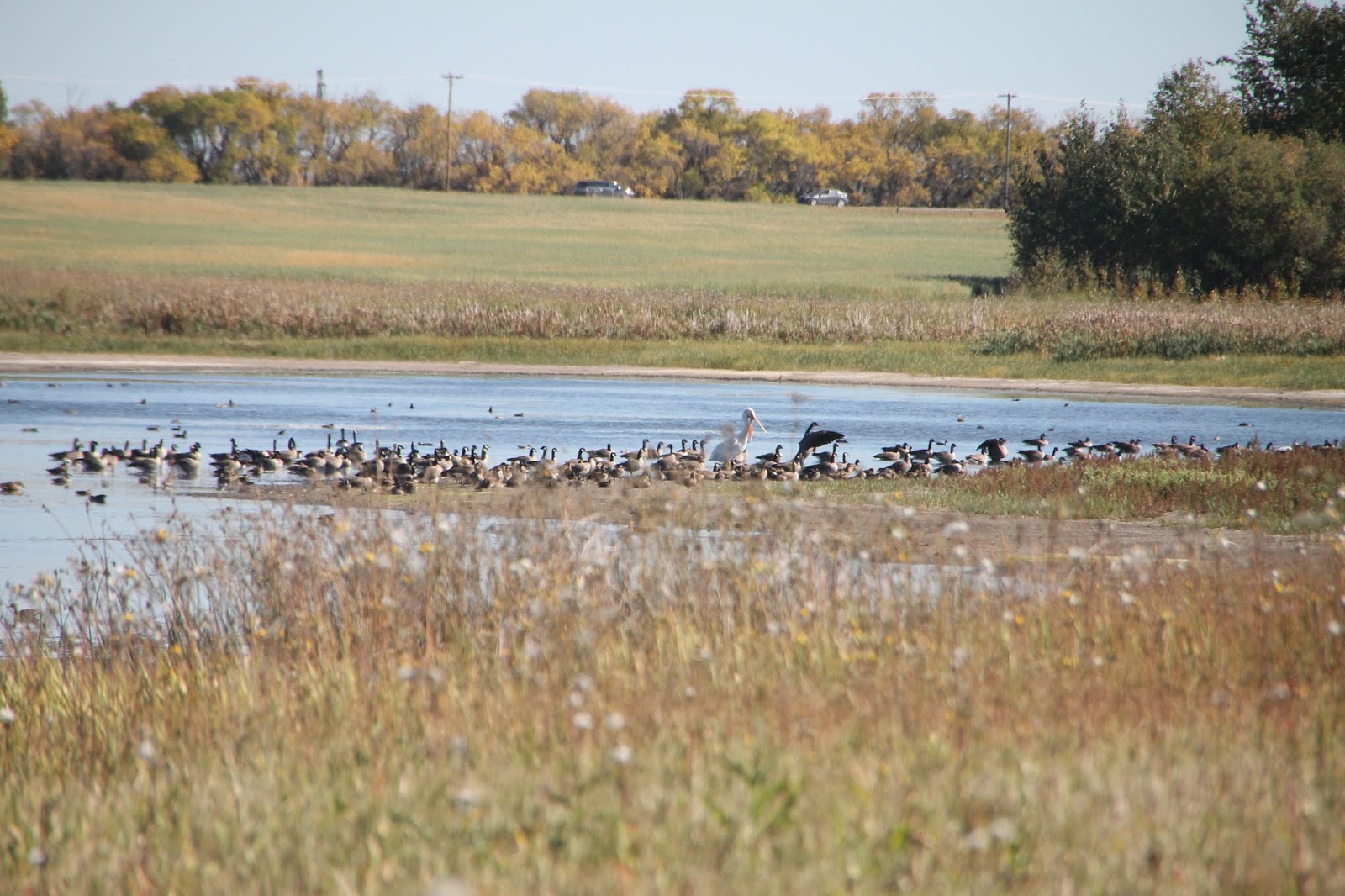
(We cannot end on such a morbid note, so here's a pelican that appears to be the leader of a flock of geese, Chappell Marsh)


Thursday, 12 September 2019

Reflections on Grad Studies


Tomorrow I will defend my thesis for my Master of Science in Community and Population Health Science at the University of Saskatchewan. At the end of this stage of my career, I would like to reflect on what a great experience it’s been.

In 2017 I had a great job with a large company. I’d worked there for nearly seven years and it had provided me with many amazing opportunities and challenges, but I was starting to feel like something was going off track. While the work was still exciting and challenging and I loved my co-workers, I was getting tired. My mental health was declining and I couldn’t quite put my finger on the root cause, but knew I needed to take a step back and sort it out. I began looking for other opportunities and settled on academics.

I spent a couple of months working as a research assistant in the lab where I’d do my masters’ project before starting the academic program in fall 2017. It was totally different from what I’d worked on previously and presented many new frustrations and challenges, but overall I can’t say enough good things about the experience.


I learned how to do research, which gave me a whole new lens for looking at problems. Aside from my first semester where I took four classes (plus two weekly seminars), the program allowed a lot of flexibility and I was able to get back on track mentally. I am not sure I’m ever going to be cut out for traditional full-time employment again, but during my schooling I also worked at two different casual positions and am thinking I’ll be pretty happy with the consultant life going forward.

I had the best supervisor I could have asked for, and learned so much from her - not just about how to be a good researcher but how to be a professional, inclusive leader when you have an extremely diverse and ever-changing team. In industry, you hope your team stays the same as long as possible, where in academia you know people won’t be around longer than 4-5 years. As such you have to get to know people quickly and start working hard out of the gate.


A friend who had taken a similar path, i.e. left a big corporate job for an academic “break” a couple years before me provided the advice to just “apply for everything” during the program. “There’s a lot of travel funding that less people than you’d think apply for” she said. And she was right – I had the opportunity to attend six conferences over two years, three of which were paid for by non-academic sources that I applied to. I travelled to Italy (twice!), New Orleans, Minneapolis, Vancouver, and Quebec City, where I presented my work, met interesting people, and gained new perspectives about how different industries and countries solve problems related to occupational health and safety.


There’s so much more I could mention, but we’d be here for weeks. To say this experience was life-changing barely does it justice – it honestly impacted every nook and cranny of my life in a positive way. While it’s time to move on, I hope to keep my foot in the door of academics, and will look back on this leg of my career as extremely formative. I’m so glad I did this.

Monday, 2 September 2019

Local Fruit and Vegetable Roundup

Summer is ending. There is much to be sad about at the end of a Saskatchewan summer, such as realizing you'll have to start wearing socks again soon, the last trip of the year to The Lake, and waking up when it's still dark, but one of the great things about the end of summer is the amazing bounty of local produce available. Since I started this blog a little late in the season, I don't really have the time to dedicate an entire post to each of my favourite fruit and vegetable producers, but I want to share my list. Maybe next summer I'll dive more in depth to each one.

I will note in Saskatoon, two major farmers' markets are operated in the summer months - the main Saskatoon Farmers' Market at River Landing, and the Community Farmers' Market of Saskatoon, which operates on 8th St two days a week and 51st St one day a week. Many of the larger producers attend both markets.

In no particular order, I highly recommend the following:
  • Kaleidoscope Gardens out of Dundurn, for specialty vegetables. Everything these folks grow is excellent quality and so unique. My favourites are the padron and shishito peppers, but I also frequently purchase their eggplant, squash, and kale. They run out of the Saskatoon Farmers' Market and may be attending the Community Market later in the season. They are also exceptionally nice people who take the time to get to know their customers' names and favourite products.
  • The Strawberry Ranch for sweet corn. It's been a bad year for corn and sadly theirs isn't available this year, but it's always the best tasting corn around. I hope next year they have better luck!
  • Little Quail Ridge Orchards (no website, but here's a brief profile from a local food blog) for BC Fruit. This orchard sells directly at several farmers' markets in Saskatchewan, including both major Saskatoon markets. Best tasting fruit around and great deals on case lots.
  • WorldAway Farm (no website) for delicious fresh asparagus all spring long! They are at the Saskatoon Farmers' Market and sell other produce, including garlic, later in the summer.
  • The Garlic Garden out of Yorkton for all garlic-related products. They no longer attend the Saskatoon Farmers' Market but are at the Community Market on Fridays. Awesome garlic, though last year I bought a bag from them and planted my own so I won't need to buy any this year. They cautioned me that it's not seed garlic, but I had great success with 41/42 cloves growing into full heads, which are now all curing in my garage. Previously I'd buy a bag of rounds, which lasted a bit longer through the winter than normal cloves.
  • Rhodes' Raspberries and Blackcurrants just off Valley Road, for u-pick (or pre-picked) haskaps, saskatoons, raspberries, and blackcurrants! Their prices are great and the owner is the nicest. They also had the biggest and juiciest saskatoons I've ever picked. They've got black and golden raspberries as well as red, if you've ever wanted to try different varieties. Sadly no blackcurrants this year.
(These are my own backyard raspberries, but when I want more than a small bowl I go to Rhodes'.)
  • I really love Robertson's Valley Farm on Valley Road, though they are effectively a new business this year as they're now operated by Spring Creek Garden. Robertson's had amazing quality produce, but Spring Creek is no slouch either! They mostly grow the same items though I do miss the gigantic kohlrabi and Spanish onions Robertson's had. Their greenhouse (still operated by the Robertsons) tomatoes are my favourites. The onion bunches are a steal, and they grow great broccoli and cauliflower.
  • Speaking of brassicas, I got the most giant cauliflower I've ever seen in my life from G&R Gardens (main market) a couple weeks ago for FOUR DOLLARS. It was easily 2-3 times the size of a standard head from the grocery store. Who says the farmers' market is too expensive? G&R are also the only producer who appear to have large kohlrabis this year.
  • Grandora Gardens is the place to go (both markets) for fresh and local greenhouse produce year round. Their cucumbers are my favourite product; they seem to last a week or more on the counter, and they are usually cheaper than the grocery store (though you can also buy their produce at the Co-op). They also sell a variety of hot peppers and tomatoes. While I'm personally not in love with greenhouse tomatoes, it's nice to have the option to buy from a local producer when I get a January craving for Greek salad.
(All-local beet borscht ingredients ready to throw in the pot.)

I know there are tons of other great producers I'm missing. It can be overwhelming to attend a farmers' market in Saskatoon in the summer because there are SO many farmers with wonderful looking products, so the best strategy I've found is to pick a couple producers whose quality I like and stick with them, as most of the vendors at the markets are pretty standardized on the prices of produce. If you have a favourite fruit or vegetable grower from the Saskatoon area that I haven't mentioned, please leave a comment! At some point I'll do a post on my favourite local meat producers as well.

Tuesday, 27 August 2019

Grassroots Cafe at the Auto Mall

The other day I went for lunch at Grassroots Cafe, in the Alloy Collision Centre (haha what?) at the Wyant Group auto mall (haha WHAT?). Grassroots Cafe is part of Grassroots Restaurant Group, i.e. Saskatoon's claim to food fame, Chef Dale McKay. It was excellent!

I would never have even heard of this tiny cafe if my sisters didn't go to the Sage Beauty Bar in the same building for eyelash extensions. Listen, I'm as confused as you are as to why people are getting eyelash extensions at the auto mall, but I also went there and got a delicious sandwich next to what appeared to be a small car museum, so maybe we just need to accept that none of this makes sense. It almost has zero online presence and is not included on the Grassroots OR Alloy websites. It's like a speakeasy for artisanal sandwiches - it looks like you're walking into a building to ask about fixing your car but really you're just there to get lunch.

The menu is limited to a few sandwiches, a couple salads, and one daily soup. However, all three of us were really impressed by our meals, and the prices were reasonable, especially considering the food quality. Everything was extremely flavourful and fresh. I mostly work from home in Stonebridge and also have a few friends with offices in the neighbourhood, so this will probably become our new go-to lunch spot!

Sorry, new to blogging in the Instagram era, did not take pictures.

Thursday, 22 August 2019

Field-Ripened Strawberries


When The Strawberry Ranch stopped growing strawberries a couple years ago, it was almost as if a death had occurred. Maybe not akin to the death of a close loved one, but perhaps that of a former co-worker or acquaintance that you enjoyed running into every so often, and felt a profound sadness when you realized you’d never see them again, even though they weren’t a critical part of your life, they still made your day better when you saw them. Is this too morbid of a metaphor?

The strawberries from The Strawberry Ranch were sublime. This is not an exaggeration. There is no contest between store berries that are picked before they ripen to ensure they can be shipped without too much bruising, and allowing the berries to fully ripen on the plant. I recall one August day at my former place of work, a cube farm mate, T, announced that she was heading over to pick up some strawberries at lunch. Another cube mate, J, began scoffing, asking what could possibly be so great about STRAWBERRIES that she had to drive out of town to get them when she could just buy them at the grocery store. T shook her head. “J,” she said, “you’ll see when I get back.”

When she returned, she placed a couple of ripe berries on his desk. Cries of “OH MY GOD. THIS IS SO GOOD. WHAT IS THIS” could be heard from J’s cubicle. And that, friends, is the story I always think of when I remember the magical natural candy that was produced at The Strawberry Ranch, and why so many of us in Saskatoon and area legitimately mourned when we found out that they were discontinuing their namesake berry. I know The Berry Barn still grows hydroponic strawberries, but whether it’s actually true or not I just don’t believe fruit tastes as good when it’s grown indoors (though I am 100% pro-hydroponic food production, maybe a hypocrite, but let me enjoy this once-per-year indulgence).

This year, I learned of a new grower in the Saskatoon area. Raina’s Organics began selling locally grown, organic strawberries at the Saskatoon Farmers’ Market in early August. I arrived at the Farmers’ Market last Saturday minutes before opening to ensure I could score a container. And while I have to admit that they aren’t quite as good as The Strawberry Ranch (due I think to picking a little less ripe), they are still miles better than anything in a Driscoll’s box from California. We ate them one day with balsamic whipped cream, and another day in homemade strawberry shortcake, which honestly might have been the best thing I ever made, in my life, and I am a very good cook. Here is the recipe, and a photo that my sister took when she made it because I was too excited to even take a photo.

Strawberry Shortcake for Two
Adapted from One Dish Kitchen

Shortcake:
½ cup all purpose flour
1 tbsp granulated sugar
½ tsp baking powder
1/8 tsp baking soda
1/8 tsp salt
2 tbsp coconut oil (solid)
3-4 tbsp buttermilk, kefir, yogurt, or sour cream

Filling:
About ½ cup heavy cream
1 tsp vanilla
About 1 cup sliced strawberries
1 tbsp brown sugar

Method:
Stir the sugar into the strawberries and allow to sit for at least 30 minutes to release juices.

Make the shortcake: Mix all dry ingredients together, and cut in oil with a pastry blender until it looks a bit like oatmeal scattered throughout the dry ingredients. Stir in the liquid until the dough comes together, it should be soft but not sticky. Do not knead. Gently shape into two balls, and flatten slightly, but not too much because you want a nice height. Refrigerate for at least 20 minutes.

Heat oven to 400 and bake the cakes on parchment for about 13 minutes.

Beat the cream and vanilla to make whipped cream. Add more cream if the amount looks stingy.

Cool the cakes slightly, then cut in half and fill with strawberries and whipped cream.


Tuesday, 20 August 2019

Getting Exercise


The single best thing I’ve done for my general health and wellbeing over the past few years is finally, truly get into the habit of regular exercise. We all know that exercise is supposed to be the magical cure-all (or at least a drastic risk-lowerer) for everything from heart disease to cancer to depression, but darn it if this isn’t easier said than done. There are many forms of exercise that are just not fun and even though you know it makes you feel better after you do it, what a burden to work up the energy and willpower to actually start! Here is what helped me build exercise into my daily routine. 

  1. Methodically make it a habit - I began my “daily exercise” journey with a New Year’s Resolution to get at least “some form” of exercise every day. This didn’t mean a set amount of time, just to do SOMETHING active. This could even include mowing the lawn. For about six months, I recorded my daily exercise in a spreadsheet, until I got to the point where I was remembering to exercise but forgetting to update the spreadsheet. It’s true what they say – when you start doing something healthy with the goal of doing a little, you end up wanting to do more. This began in January 2018 and I’ve maybe only missed a handful of days due to illness or injury.
  2. Active transportation - I just said I made exercise a part of my routine, but I don’t actually have a routine. I’ve been doing a masters degree for the past two years, and working casual part time at two other jobs since early 2019. This schedule does not lend itself to a daily gym visit at 4pm, so I have worked towards incorporating active transportation into my life whenever possible. This means: if I need to go to the grocery store (three of which are within 2 km of my house), I walk or bike. If it’s possible to walk or bike to work (or even go to work a bit early and take the long way from my parking spot), I do. Not surprisingly all the excuses I used to make that “biking from my house to the university is too far” turned out to be completely unfounded. It takes only 10 more minutes to bike to campus/downtown than to drive, and upon arrival I feel energized rather than lethargic as I am no longer draining my mental energy via driving.
  3. Fun, cheap exercise at home - For days where I don’t have to go to work/school/store, or if it’s pouring rain with 100km winds, I figured out out what kinds of exercise I could do at home that I didn’t hate. While we have a power rack and some body weight equipment in the basement, I just don’t like weight training (though this is my husband Brahm’s preference for habitual exercise). What I do like is yoga, and jumping on a trampoline. I bought a used mini trampoline for $30 and an annual subscription to yogadownload.com for $40, and have two very enjoyable forms of exercise I can do when I have a free half hour, without leaving the house.


In the end, like so many things we know will improve our lives but don’t do, it came down to stopping making excuses as to why I couldn’t exercise. That said, it also helps that I live close enough to walk year-round to a few places I frequent (grocery store, drugstore, library). While it might add a few minutes to a commute to bike or walk, I see it as an efficiency gain as not only am I getting from A to B, I’m also improving my health and energy levels (as well as not spending any money on gas).

I haven’t become a fitness guru by any means, and I could always be in better shape, but I feel stronger both physically and mentally, and empowered by active transportation. I hope I’ve been able to cultivate a habit that will stick with me for the rest of my life.